Marketing Is Entering Its Maturity Phase in 2026 and Growth Will Look Different


Summary: 2026 marks a turning point in digital marketing. AI is no longer a trend—it’s the invisible engine running your campaigns, decisions, and customer experiences. But while technology accelerates, growth now hinges on something deeper: strategy, trust, and connection. Outdated tactics—chasing clicks, relying on third-party data, over-testing channels—can’t keep up. Today’s reset demands a strategy-first mindset, AI-powered infrastructure, and human-centric marketing that builds real relationships. At WSI, we believe the brands that balance automation with authenticity will not just survive this shift—they’ll lead it. Here’s how to reset your marketing for 2026 and beyond.
Key Highlights:
- Marketing Enters Its Maturity Era: 2026 shifts marketing from experiments to systems—measured by retention, LTV, and business impact, not clicks.
- AI is Now Your Marketing Backbone: It connects data, content, and decisions across your ecosystem—enabling scale, speed, and personalization when guided by human intent.
- Strategy-First Beats Platform-First: Winning teams map marketing to how buyers actually decide—aligning tech, content, and channels to support self-guided journeys.
- Balance Automation with Authenticity: Automation delivers consistency; human judgment delivers connection. Avoid the trap of over-automation.
- First-Party Data is Your Growth Fuel: As third-party cookies vanish, owned data such as email addresses and loyalty insights become the engine for personalization and trust.
- Leadership Defines 2026 Success: Business leaders who focus on adaptability, skill-building, and cross-team alignment to stay ahead.
The way marketing works is changing fast. And in 2026, the shift is clear. Marketing is moving away from testing ideas to running mature systems. AI is becoming part of daily operations. Strategy is leading every decision. Authentic human connections matter more than ever.
This reset helps you stop guessing. It helps you focus on what actually drives growth.
Marketing Moves Into a Maturity Era
For years, marketing was driven by endless testing—chasing platforms, formats, and quick wins. But in 2026, that approach no longer scales.
Marketing is entering its maturity era, where teams build systems that deliver repeatable outcomes. Strategy replaces guesswork. Growth is tied to customer lifetime value, incrementality, and retention, not surface metrics like clicks or ROAS (return on ad spend).
The gap? Most brands still run AI in pilot mode. McKinsey reports that nearly two-thirds of organizations still run AI in pilot mode rather than at scale. That gap explains why many brands feel stuck. They test tools without changing how marketing actually operates.
Meanwhile, buyers act differently. They don’t follow funnels—they self-research, pause, compare, and often decide before ever speaking with sales. Gartner confirms: vendor interaction is just a sliver of the modern B2B buying journey.
Marketing now must support this loop with content that informs, not just promotes, and with metrics that reflect real business impact.
AI Is Now the Marketing Operating System
In 2026, AI is no longer a tool—it’s the invisible infrastructure running your marketing engine.
Gone are the days of AI writing headlines or bidding on ads in isolation. Today, AI connects data, content, and decisions across your entire system—enabling real-time optimization, predictive insights, and personalization at scale.
Platforms such as Salesforce Einstein and HubSpot Breeze AI already reflect this shift. These systems adjust messaging, budgets, and experiences based on live behavior from actual clients and prospects rather than fixed rules.
This shift turns AI into the operating layer beneath your marketing. It powers dynamic experiences: landing pages that adjust layouts in real time, emails that time themselves, and ads that update automatically. This is hyper-personalization at scale.
Generative AI also changes the content supply chain. Tools like ChatGPT and image-generation platforms accelerate idea development and production—but only work when humans set direction and maintain brand tone.
👉 AI handles the volume and signal detection. Humans guide strategy, ethics, and emotion. That’s the winning balance.
Teams Are Shifting from Task-Doers to System Designers
With AI now handling much of the repetitive execution, the role of marketers is evolving—fast.
Modern marketing leaders are becoming system architects: designing workflows, aligning platforms, and ensuring decisions reflect brand voice, ethics, and goals.
This transition demands new skills:
- Understanding how data moves across systems.
- Translating insights into strategic direction.
- Setting policies for accuracy, bias, and privacy.
And it’s not just a legal obligation. Data governance is now a brand trust issue. Mishandling customer data erodes confidence—and competitive edge.
There’s another risk: AI fatigue. Generic content and robotic automation push audiences away. The solution? Maintain human oversight to ensure content stays personal, empathetic, and on-brand.
What Strategy First Means in 2026
In 2026, “strategy-first” doesn’t mean long presentation decks or dense policy documents—it means starting with how your buyer actually makes decisions.
Too many teams still plan around platforms: “Should we try TikTok?” “What email tool should we buy?” That’s backward.
Strategy-first thinking asks: How does our buyer research, compare, and decide? Then it aligns content, channels, and tools around that journey.
This mindset:
- Prioritizes relationships over reach
- Favors trust-building over transactions
- Builds communities, not just pipelines
And it centers on first-party data. As cookies fade, owned relationships—emails, loyalty programs, gated content—become your growth engine. Salesforce reports that 80% of marketers now rely on first-party data for personalization.
But you have to earn it. Offer real value—calculators, exclusive insights, helpful tools—in exchange for trust.
Strategy-first also requires cross-functional alignment. Marketing, sales, and service can’t operate in silos. Shared messaging and goals create a seamless buyer experience.
Finally, search is evolving. Content still needs SEO basics—but now must support AI-driven discovery. That means:
- Clear structure
- Direct answers
- Up-to-date facts
📌 Content built on Experience, Expertise, Authority, and Trust (E-E-A-T) isn’t just better—it’s what AI chooses to surface.
The Future of SEO is Here
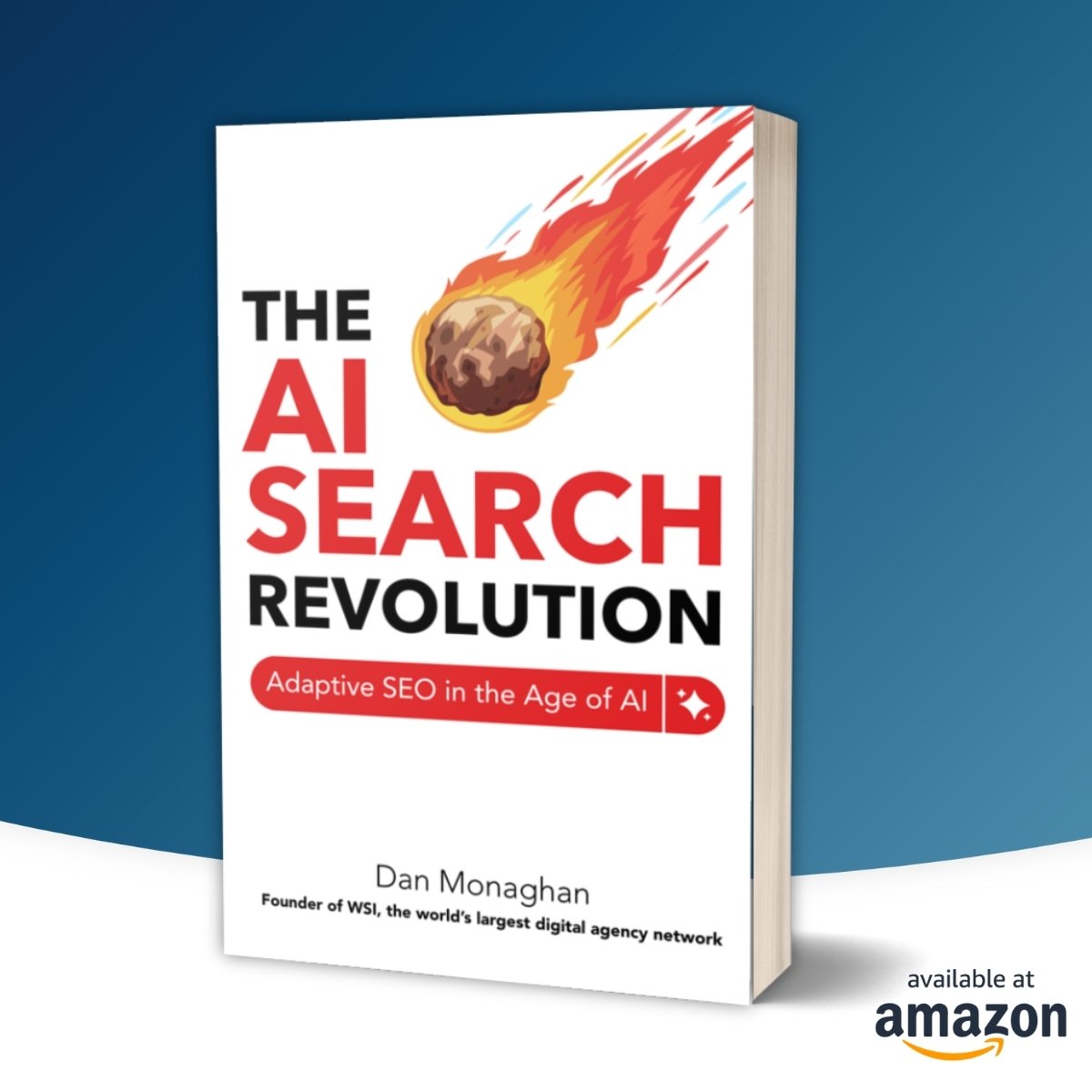
The AI Search Revolution: Adaptive SEO in the Age of AI
Written by WSI’s Founder, Dan Monaghan, outlines a modern roadmap to help marketers and business owners shift from outdated tactics to AI-trusted strategies. Get Your Free Preview Now
Authenticity vs Automation
Automation is powerful. It delivers speed, scale, and precision by managing triggers, segmentation, scheduling, and responses.
But authenticity is what builds trust. It’s how brands show empathy, personality, and relevance in moments that matter.
Where things go wrong:
- Over-automated inboxes feel robotic.
- Scheduled posts miss the moment.
- Generic AI-written content sounds hollow.
Audiences notice because templated language is easy to spot.—and real interaction stands out.
The solution? A hybrid approach:
- Use AI to inform, not replace, human creativity.
- Let data drive targeting and guide decisions.
- Let humans shape voice, judgment, and emotional nuance.
💬 Technology supports connection—but humans create it.
Brands that strike this balance don’t just “scale”—they resonate. Apple earned praise for highlighting handcrafted production in a recent campaign. Refy creates social content that feels native to each platform rather than overproduced. Black Sheep Brewery leans into local community language that feels personal.
The lesson is simple: technology supports connection. It does not create it.
How to Build a 2026 Marketing Plan That Actually Works
Marketing in 2026 isn’t linear—and your plan can’t be either.
Buyer journeys loop. Decisions stall. Multiple stakeholders weigh in. To win, business leaders must design adaptive systems, not static funnels.
Here’s what that looks like:
- Reframe your metrics: Stop measuring clicks. Start tracking CAC, LTV, and pipeline velocity. Marketing is a revenue engine—not just a cost center.
- Understand today’s buyer: They self-educate. Support that with tools: knowledge bases, ROI calculators, demos, and FAQs. Even in B2B, human-to-human thinking wins.
- Use AI with governance: AI powers personalization—but humans ensure accuracy, voice, and ethics. Set clear guidelines for acceptable use.
- Create trust-earning content: Share real numbers. Explain pricing. Address tough questions. Video is essential: long-form builds credibility, short-form builds familiarity.
- Build what you own: Email, SMS, and communities are direct channels. They protect you from platform shifts and strengthen loyalty.
- Plan in quarters, not years: Agile wins. Review strategy quarterly. Shift budgets based on performance. Make testing and learning your norm.
- Upskill your team: Invest in data fluency, AI literacy, and creative problem-solving. Outside help supports, but internal ownership builds lasting advantage.
The Reset Is About Balance
The 2026 marketing reset is not about choosing between technology and humanity. It is about using both well.
AI provides intelligence, speed, and scale. Strategy provides direction. Authenticity builds trust. Brands that combine these elements move past experimentation. They build mature systems that grow with their customers.
If your current approach feels scattered, that is a signal. The reset is an opportunity to simplify, focus, and lead with purpose.
Marketing does not need more tools. It needs clearer thinking and better execution guided by real human understanding.
As you prepare for 2026, remember that this is a reset moment. Marketing maturity means thinking beyond quick wins and one-off tests. It means building systems where AI, strategy, and human connection work together to drive real business results.
You don’t have to guess where to start:
- Focus on strategy first.
- Use AI as a core part of your infrastructure, not just a helper.
- Own and use your first-party data.
- Tell human stories that build trust.
- Measure what matters to your business.
- And make plans that adapt to changing conditions.
If you want expert support in weaving AI, strategy, and execution into your marketing plans, our AI consultants can help. We work with your team to develop practical, forward-looking plans that align with your business goals and customer needs. Read up on our AI consulting services to learn how we guide organizations through this next era of marketing.
With a clear focus and the proper support, you can move confidently into 2026, prioritizing what actually grows your business.
FAQs – How is AI Changing Marketing?
What is the 2026 marketing reset all about?
The 2026 reset shifts marketing from experimentation to systemized, strategy-first execution. It’s driven by AI infrastructure, first-party data, and the demand for authentic brand experiences that build long-term growth.
How is AI changing the role of marketers?
Marketers are evolving from executors to architects of intelligent systems. AI handles scale and signal recognition, while humans lead strategy, ethics, and voice—requiring new skills in data fluency and oversight.
Why is first-party data more important in 2026?
First-party data replaces third-party cookies and powers personalization and performance. Brands now must earn this data through value exchanges like tools, insights, or community access.
What does “strategy-first marketing” mean now?
It means starting with how buyers decide—not with which platform to use. Teams align content and channels to support real decision journeys, not just push messages.
How can brands balance automation with authenticity?
Use AI for speed and scale, but keep humans in charge of tone, empathy, and timing. Over-automation leads to robotic experiences; hybrid strategies build trust and distinction.
What content performs best in AI-driven search?
Content that is structured, specific, and trustworthy—optimized for both humans and AI. Think: answer-focused formats, E-E-A-T alignment, and up-to-date facts across pages and visuals.
What should CMOs prioritize in 2026 planning?
CMOs should focus on revenue-aligned metrics, agile planning, owned audiences, and team upskilling. Leadership now means building adaptive systems that respond to buyers, not just channels.

Why Email Still Delivers the Highest ROI in 2026 (and How to Max It)

Over Half of Website Traffic Isn’t Human. It’s Time to Rethink Performance Metrics.