Summary: More traffic won’t grow your business if your website doesn’t convert. Small changes to how you present information, ask for contact details, or build trust can double or even triple your results, without spending more on ads. This session walks you through what’s going wrong and what to do instead.
Key Highlights
- Why increasing your conversion rate is more valuable than boosting traffic
- The top six reasons visitors don’t convert—and how to fix them
- Practical tactics to improve forms, CTAs, pop-ups, and mobile experience
- How trust signals and video content influence decisions
- What to avoid that could kill your lead generation efforts
- FAQs to help you understand and measure conversion success
In this session from WSI’s webinar series, WSI-certified consultant Chuck Bankoff shares strategies on how to convert website visitors into leads without spending more to drive traffic. While more visitors are good, it’s the conversions that grow your business. Chuck explains how to turn more of your existing traffic into leads using smart, effective tactics.
Why Increasing Conversions is Better than Increasing Traffic
Increased website traffic may look good, but it may not translate into meaningful business outcomes. The number you want to see increasing is your conversions, even if the number of visitors stays the same.
So instead of focusing on increasing traffic and maintaining the same conversion rate, you need to work on improving your conversion rate. Say, for example, you get an average of 12,000 visitors to your site per year, and you have a 1% conversion rate. The 120 paying customers you get as a result may not be enough to meet your business targets – you may need 360 converted customers.
Now you could triple your traffic so that you get 360 customers at the same conversion rate, but that is the more expensive and more challenging option. We show you how to increase conversions without needing to triple traffic and how to convert website traffic into leads using smarter strategies instead.
Key Takeaway: Tripling your traffic can be costly and slow. Tripling your conversion rate is faster and cheaper, and gives you the same results.
Reasons Why Your Visitors Aren’t Converting
-1.png?width=396&height=396&name=unnamed%20(11)-1.png)
1. Slow Site Speed
Visitors won’t wait for a slow site to load. Just a 1-second delay in load time can reduce conversions by up to 7%.
Speed matters. A delay of just one second can lower your conversions by 7%.
2. Weak or Missing Call-to-Action
If your call to action isn’t clear, visible, or persuasive, visitors won’t know what to do next or why they should do it now.
3. Poor Mobile Experience
Most users visit from mobile devices. If your site is hard to navigate or read on a phone, conversions will drop.
4. Unclear Value Proposition
If visitors don’t quickly understand what you offer and how it helps them, they won’t stick around or take action.
5. Lack of Trust Signals
No reviews, testimonials, or secure payment icons? People need proof that your business is real and safe before they commit.
6. Forms Are Too Long or Complicated
Asking for too much too soon drives people away. Short, simple forms convert better, especially on mobile.
Conversion Stuff You Need to Know
If you want to see a threefold increase in conversions, start with some basic principles:
1. Remember That Less is More
Don’t overload your audience with information. People consume information online in short, bite-sized pieces. At the same time, don’t ask for too much either: don’t hit the reader with too many forms or requests for contact information upfront. The less information you ask for, the more likely your reader will be to fill out your form.
2. Be Careful with Pop-ups
Pop-ups can be useful, but they can also be very annoying and drive a potential lead away. There are different ways to trigger a pop-up. Rather than bringing one up as soon as your reader enters your site, wait until they’ve had a chance to look around, then offer the opportunity for more information, a newsletter subscription, etc.
3. Use Live Chat and Chatbots with Care

Chatbots are an excellent tool for guiding visitors towards conversion, but there is a right and wrong way to use them. For one thing, never try to convince your audience that your bot is a real person. Another crucial thing to remember is that a chatbot can be used to sort your audience into segments from the moment they enter the site. For example, the bot might ask whether they are existing customers or new visitors and then direct them accordingly.
4. Video Storytelling is Incredibly Effective
The less you give your audience to read, the better. Video content can help to drive conversions, but remember the ‘less is more’ principle. About 30% of the best landing pages include video, which can increase conversions up to 86%. Don’t make your videos too long or try to say too much. Choose short, powerful videos that communicate your brand’s most exciting attractions.
Landing pages with short videos can increase conversions by up to 86%.
5. Provide Proof to Back Up Your Brand’s Claims
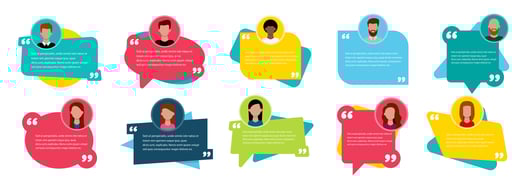
Reviews, testimonials, and case studies are all great for nurturing a sense of trust. Having at least 50 reviews can increase conversion rate by up to 4.6%. Wherever possible, link to references on off-site platforms like Google Reviews, Yelp, Facebook, or LinkedIn. If you have won awards or other industry accreditations, display them proudly!
The Call-to-Action
Once you’ve got your reader to stick around, read some testimonials and show some sustained interest in your brand, the next step is all-important. You must offer a compelling call to action to ensure that they move to the next step. Keep it simple and direct, and motivate the reader to click. Your CTA is your moment of truth.
Some important rules to remember are:
- Make it easy to notice
- Keep it above the fold
- Repeat it below the fold
- Use first-person voice
- Use action words
- Evoke a sense of FOMO
- Time the CTA carefully, particularly when using pop-ups.
Campaign Killers- How to Undermine Your Best Efforts
One way to engineer your online platforms for better conversions is to keep in mind what NOT to do. Here are the prime culprits when it comes to killing digital marketing campaigns:
- Too much text
- Too many links
- Unnecessary required fields
- No email privacy info
- Lack of communication choices
- Inadequate shipping and pricing information
- Error pages, broken links – anything that doesn’t work
Contact Us – We Can Optimize Your Website for Leads
Essentially, conversion rate optimization comes down to clear, concise communication that leaves the audience in no doubt about the benefits of following your call to action. If you would like expert help optimizing your conversion rate and boosting your lead generation efforts, contact WSI, or watch the full webinar on conversion rate optimization.
The Reality: Broken links, poor forms, and confusing pages don’t just frustrate users; they cost you leads.
Frequently Asked Questions about Website Conversions
What is a website conversion?
A website conversion happens when a visitor completes a desired action. This could be filling out a form, making a purchase, calling your business, or signing up for a newsletter.
Why are conversions important?
Conversions show how well your website turns visitors into leads or customers. More conversions usually mean better return on your marketing.
How do I track conversions on my site?
You can use tools like Google Analytics, Google Tag Manager, or CRM systems. These tools help track actions like clicks, form submissions, and purchases.
What’s a good conversion rate?
It depends on your industry and goals. For most websites, a conversion rate between 2% and 5% is average. High-performing sites can go beyond that.
What affects my conversion rate?
- Page load speed
- Mobile usability
- Clarity of your offer
- Call-to-action placement
- Trust signals like reviews or certifications
How can I improve my conversion rate?
- Simplify your forms
- Use strong headlines
- Add clear calls to action.
- Include social proof
- Test different page layouts
Do I need a landing page to boost conversions?
Yes. Focused landing pages with a single goal usually convert better than general site pages. They remove distractions and guide users to act.
What is A/B testing, and should I use it?
A/B testing shows two versions of a page to different users. It helps you learn what design or message works better. Yes, it’s a proven way to boost conversions.
Can WSI help me improve my conversions?
Yes. WSI audits your site, tests changes, and optimizes your content and design. We focus on improving your results, not just your traffic.
How long does it take to see results?
You can see small improvements in a few weeks, but meaningful gains usually take 1 to 3 months. It depends on how much traffic your site gets, what you’re testing, and how well you apply the strategies in this session on how to convert website visitors into leads.

Which Nearby Cities Should Your Service Business Target for Growth?
The Search Authority System Behind Rankings, AI Citations, and Better Leads