Zero-Click Search Strategy: A 5-Step Plan for Businesses to Build Trust and Get Chosen

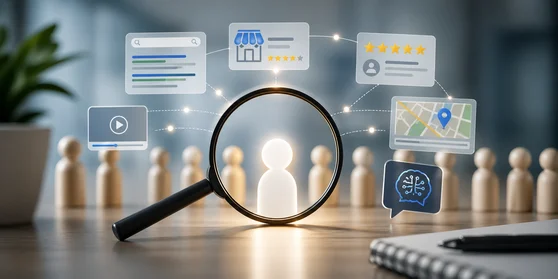
Summary: Customers are still searching for your services, but they are deciding who to contact earlier and across more platforms. Google results, reviews, and AI-generated answers now shape how businesses are compared and chosen. Many businesses are seeing steady visibility but fewer high-intent prospects turning into real customer contact. Growth now depends on how clearly, consistently, and credibly your business shows up in those decision moments.
Key Highlights
- Buyers compare before they reach out. Shortlists are often formed online across search, reviews, and AI tools before your business is contacted.
- Visibility alone no longer drives results. Showing up does not help if your business is unclear or difficult to evaluate.
- Website traffic can mask performance gaps. Strong online visibility can still result in fewer calls or qualified opportunities.
- Clarity and credibility drive selection. Businesses that are easier to understand and validate are chosen more often during comparison.
- Friction reduces conversion opportunities. If it takes extra steps to call, book, or message your business, customers move on.
- Repeated presence builds confidence. Seeing your business across multiple platforms reinforces trust during evaluation.
- Focused execution drives measurable growth. Improvements across key touchpoints lead to stronger customer flow and more consistent demand.
If your business inquiries have become less consistent, the cause is rarely demand.
Customers are still searching for your services. What has changed is how they decide who to contact. Google results, Google Business Profiles, reviews, and platforms like ChatGPT and Perplexity are now shaping that decision before your business is ever contacted.
A potential customer can compare options, read feedback, and form a clear preference without visiting a single website.
This creates a gap many businesses do not see. Many businesses are seeing stable search impressions but declining conversion from those impressions.
Search visibility may look stable in reports, while fewer high-intent prospects turn into calls or inquiries. Competitors who are clearer, better reviewed, and easier to understand in these environments influence the decision earlier. The businesses that continue to grow have adjusted. They focus on how they appear across these decision points, making sure they are credible, easy to evaluate, and simple to contact.
At WSI, we look at this through a simple lens: where are customers forming an opinion about your business, and what are they seeing when they do?
In many cases, the decision is shaped before your website enters the picture. It happens across search results, reviews, Google Business Profiles, and AI-generated answers.
The next step is to examine those moments closely and identify where your business is being overlooked, misunderstood, or outperformed.
What’s Changing in Search and How It Impacts Customer Demand
Search is no longer just about bringing people to your website. It now shapes how customers compare options and decide who to contact.
When your business appears clearly, consistently, and with strong proof across these touchpoints, customers move faster from interest to action. When it does not, they move on.
Many businesses are being found in search and listings, but not being chosen consistently. The issue is not always traffic volume. It is how your business is presented at the point where decisions are being made.
For your business, this changes the priority. You need to show up where customers are forming opinions, not just where they are searching. That includes Google results, Google Business Profiles, review platforms, and AI-driven tools that summarise and recommend options.
Understanding Zero-Click Search
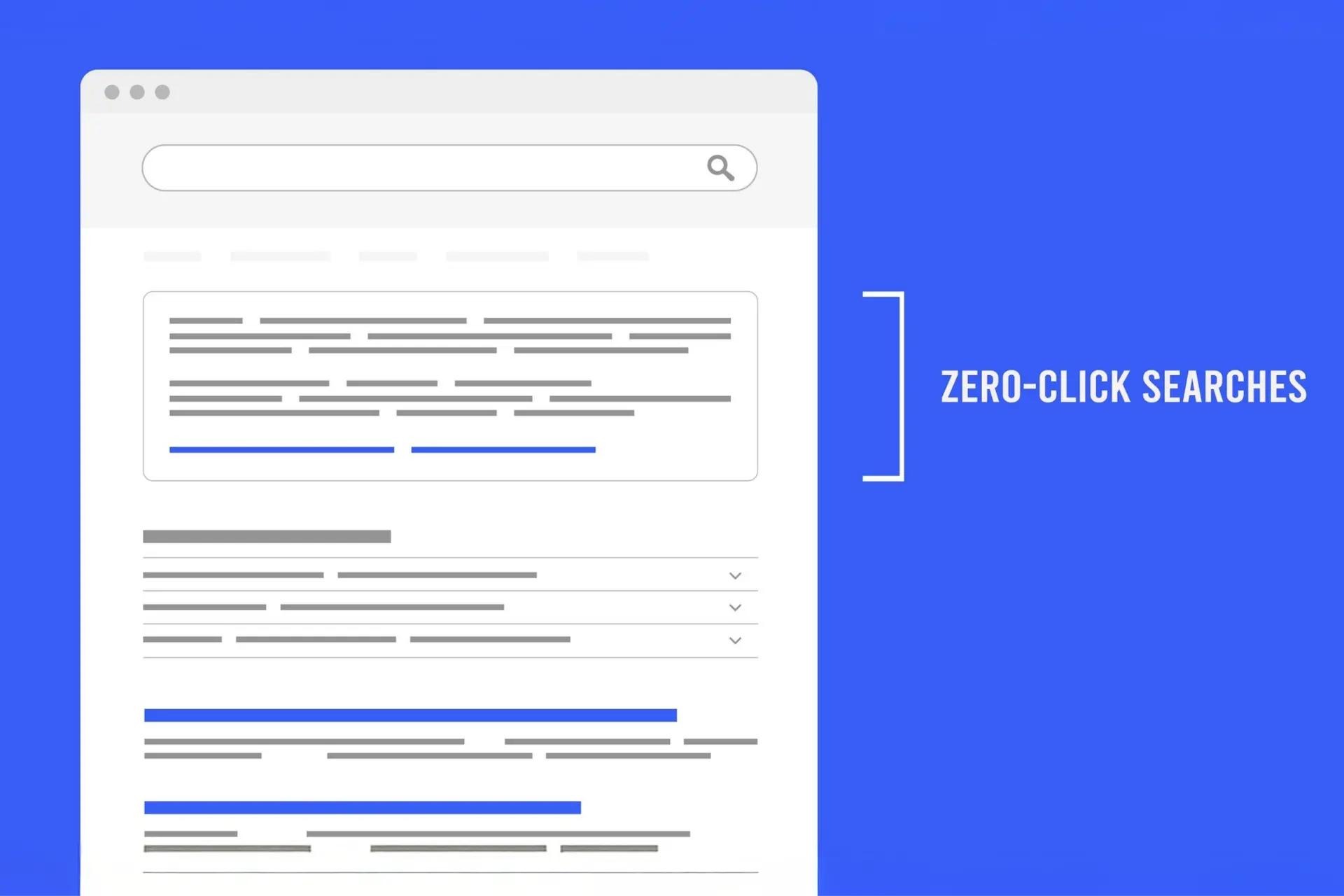
Zero-click search describes how customers now make decisions directly from search results, reviews, and AI-generated answers without visiting a website.
They compare options, assess credibility, and narrow their choices based on what they see before taking any action.
The implication is clear. Your website is no longer the starting point for evaluation. It is one of several places customers may check after forming an initial preference.
Redefining Visibility: Where Your Customers Find You Now
Customers no longer follow a linear path to your website. They compare options across Google results, Google Business Profiles, maps, reviews, and social platforms, often forming a shortlist before taking any action.
If your business is missing, inconsistent, or unclear at these points, you are removed from consideration early. What matters now is how your business appears in those moments. When a potential customer searches for your service, they should see accurate information, strong reviews, and clear signals that you are credible and easy to work with.
This is where many businesses lose ground. The issue is not awareness. It is how confidently a customer can assess and choose you based on what they see.
In one example, a boutique clothing store in San Francisco faced declining foot traffic despite strong product demand. By strengthening its presence across search and social platforms, publishing locally relevant content, improving product visibility, and collaborating with local influencers, the business increased organic traffic by 70% and grew sales by 60% within a year.
This pattern is consistent across industries. Multiple local SEO case studies show that when listings, reviews, and local content are aligned, businesses see measurable improvements in traffic, engagement, and sales.
The takeaway is practical. When your business is clear, credible, and consistent across the platforms customers rely on, it becomes easier to choose. That shift has a direct impact on customer flow and revenue.
A Quick Check: How You Show Up Across Search and Reviews
Think about how your business shows up when someone is comparing options.
→ Is your information consistent across Google, directories, and review platforms?
→ Do your reviews feel recent and credible?
→ Can someone quickly understand what you offer and why it matters?
→ Is it easy to contact or book you directly from where they find you?
→ Do you appear in more than one place during that decision process?
Gaps in any of these areas make it easier for a competitor to be chosen.
Use these questions to identify which areas need the most attention first.
How Winning Businesses Strengthen Visibility
Businesses that continue to grow have adjusted how they approach visibility. They focus on influencing decisions at the point of evaluation.
They answer real customer questions with clarity, maintain a consistent presence across platforms, and build credibility through reviews and customer experience. They also reduce friction by making it easy to take action immediately, whether that is calling, booking, or sending an inquiry.
If your inquiries have slowed, the cause is usually structural.
Incremental fixes rarely deliver consistent results. Updating a listing or requesting a handful of reviews in isolation does not change how your business is positioned when customers are comparing options.
Growth comes from a structured approach that connects your presence across platforms to demand and revenue. It ensures your time and budget are focused on the signals that influence decisions.
In practice, the difference is noticeable. Businesses that align their listings, reviews, and on-platform actions often see improvements in call volume and lead quality within weeks, not months.
You do not need a full overhaul to move forward. Targeted improvements in key areas can build momentum quickly. In many cases, strengthening listings, improving review quality, and aligning local content leads to more consistent inquiries within a short period.
The five steps below outline a focused approach to strengthen your position and convert more searches into customers.
1. Audit and Align Your Digital Shopfront
Start by ensuring your business is consistently represented across all core digital assets. Your website should be fast, mobile-friendly, and built to support conversion. Beyond your website, your business listings must be complete, accurate, and aligned across platforms.
Even small inconsistencies, such as outdated hours or mismatched contact details, can reduce trust and cost you inquiries.
2. Build Trust Signals That Influence Decisions
Customer decisions are heavily influenced by proof. Reviews, ratings, and recent customer feedback shape perception quickly.
Build a consistent process to generate reviews from satisfied customers and respond to them. This signals credibility and active engagement. Strong review profiles influence both how your business is perceived and how often it is chosen.
In many cases, customers will choose a business with stronger, more recent reviews over one with a better website.
3. Remove Friction at the Point of Decision
Once a customer identifies your business, the next step should be immediate and frictionless. Delays, unclear contact options, or complex booking steps reduce conversion.
Ensure customers can call, message, or book directly from the platforms where they find you. Simplicity at this stage has a direct impact on inquiry volume.
If a customer has to search for how to contact you, there is a high chance they move to the next option.
4. Show Up Where Decisions Are Made
Customers evaluate businesses across multiple platforms. Directories, maps, review sites, and social channels all contribute to the final decision.
Your objective is consistent, accurate representation across these environments. Each additional credible touchpoint reinforces your position and increases the likelihood of being selected.
Many customers will see your business more than once across these platforms before making a decision. Consistency across those moments builds confidence.
5. Measure What Actually Drives Revenue
Revenue is the outcome that matters.
Some channels generate attention. Others generate customers. The difference matters.
Track where your inquiries, calls, and bookings originate. Identify which platforms and signals influence decisions, then allocate more resources to those areas.
This approach keeps your marketing aligned with measurable outcomes and supports consistent growth.
At WSI, we often see that businesses do not need more marketing activity. They need better alignment across the places customers use to compare, trust, and choose.
Strengthen How Your Business Is Seen and Chosen
Search behavior has changed. The businesses that respond with a structured approach are seeing more consistent inbound demand and stronger sales performance.
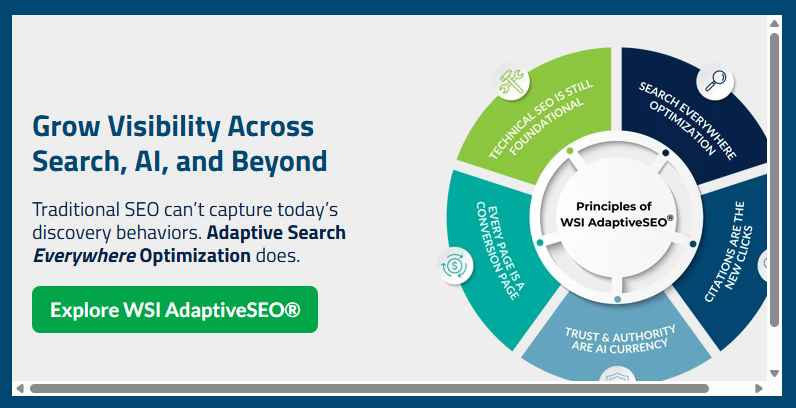
A clear approach like WSI’s Adaptive Search Everywhere Optimization ensures your business is visible, credible, and easy to choose at the exact moment customers are making decisions. This requires more than isolated updates. It requires alignment across platforms, messaging, and conversion pathways.
WSI works with growth-focused businesses to identify where your business is being overlooked, where competitors are gaining ground, and what actions will drive measurable results.
Book a strategy call to assess your current position and build a plan focused on demand generation, conversions, and sustained growth.
FAQs – Zero-Click Search Strategy for Growth-Focused Businesses
What is zero-click search, and why does it matter?
Zero-click search refers to situations where customers get enough information from search results, reviews, or AI-generated answers to make a decision without visiting a website. This matters because it shifts where businesses are evaluated and chosen. If your business is not clearly represented in those environments, you are less likely to be considered.
What do we mean by “AI-generated answers” in search?
AI-generated answers are summaries or recommendations provided directly within platforms like Google or tools such as ChatGPT and Perplexity. These responses pull information from multiple sources and present it in a simplified way, often shaping how customers compare options before taking action.
How can my business stay visible if fewer people visit my website?
Visibility now depends on how your business appears across search results, Google Business Profiles, reviews, and other platforms customers use to compare options. Accurate information, strong reviews, and clear messaging help ensure your business is understood and considered, even without a website visit.
What influences how my business shows up in search results?
Search and AI tools prioritize clarity, consistency, and credibility. This includes accurate business listings, recent and relevant reviews, and content that clearly answers customer questions. These signals help platforms understand and present your business as a reliable option.
Do I still need a website if customers don’t always visit it?
Yes. Your website remains important for validating your business and supporting conversion. It is where customers confirm their decision and take action. However, it is no longer the only place where evaluation happens.

How WSI Helped Costa Rica DMC Generate More Business Beyond Referrals

Law Firm Growth Through Digital Marketing: Anderson Boback & Marshall’s Partnership With WSI